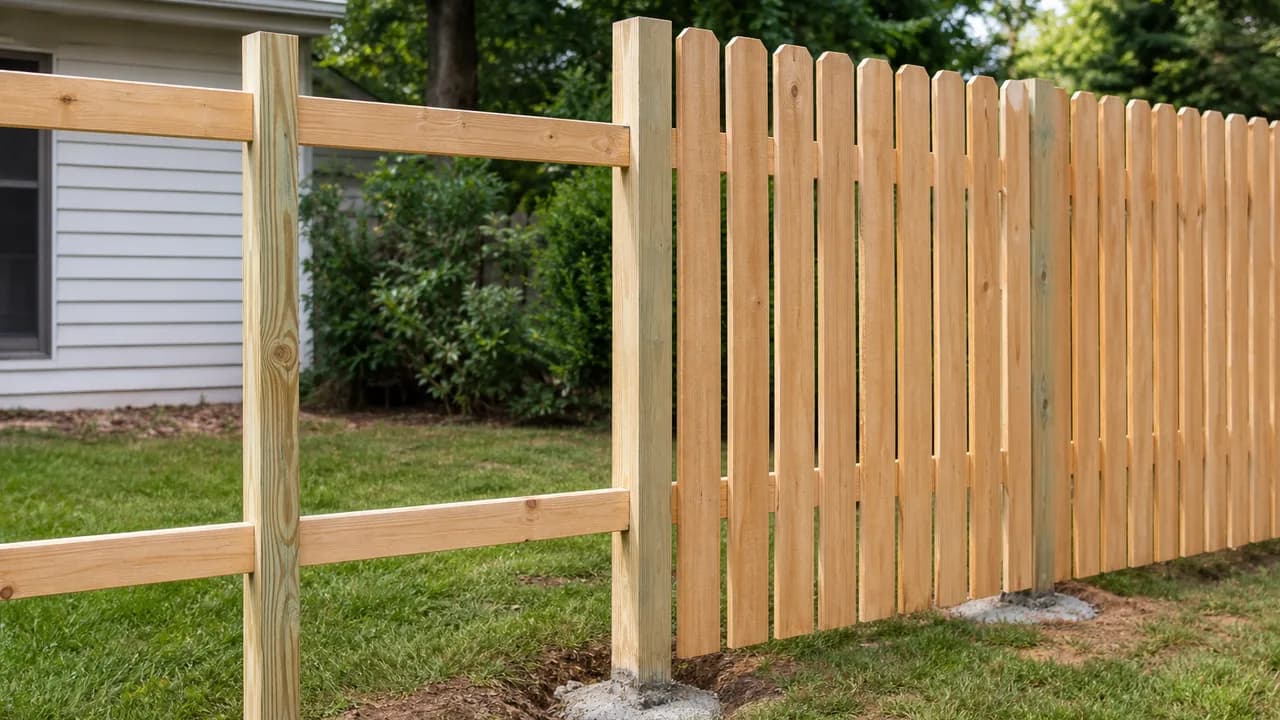
Enter fence length, post spacing, rail count, and picket dimensions to estimate posts, sections, rails, and pickets — not panels, height, or concrete.
Enter fence specifications
Your estimate
Enter your project dimensions and click Calculate to see your estimate.
Typical materials for a fence project
Posts
Rails
Pickets or panels
Concrete mix
Screws
Post and picket counts depend on spacing assumptions. Verify local code requirements before building.
Understanding the results
Fence materials are calculated from total run length, post spacing, rail count per section, and picket dimensions including gap spacing.
•Sections = fence length ÷ post spacing (rounded up)
•Posts = sections + 1
•Rails = sections × rails per section
•Pickets = fence length in inches ÷ (picket width + gap), rounded up
Post spacing
Results are planning estimates based on typical assumptions. Verify quantities with product labels and your project layout before purchase. How we calculate
Frequently asked questions
Divide total fence length by your post spacing in feet and round up for sections. Posts equal sections plus one. Enter spacing that matches your panel or rail layout.
Divide fence length in inches by picket width plus gap between pickets, then round up. The calculator uses your picket width and gap inputs.
Most privacy fences use posts every 6 or 8 feet on center. Match spacing to your panel width or rail length for the cleanest layout.
This calculator counts pickets without a separate waste percentage. Add a few extra pickets manually for cuts, defects, and gate sections.
Typical 6-foot privacy fences use two rails per section. Taller fences or high-wind areas may use three. Enter rails per section in the calculator.
No. Post, rail, and picket counts only. Concrete bags per post depend on hole size and depth — plan separately.