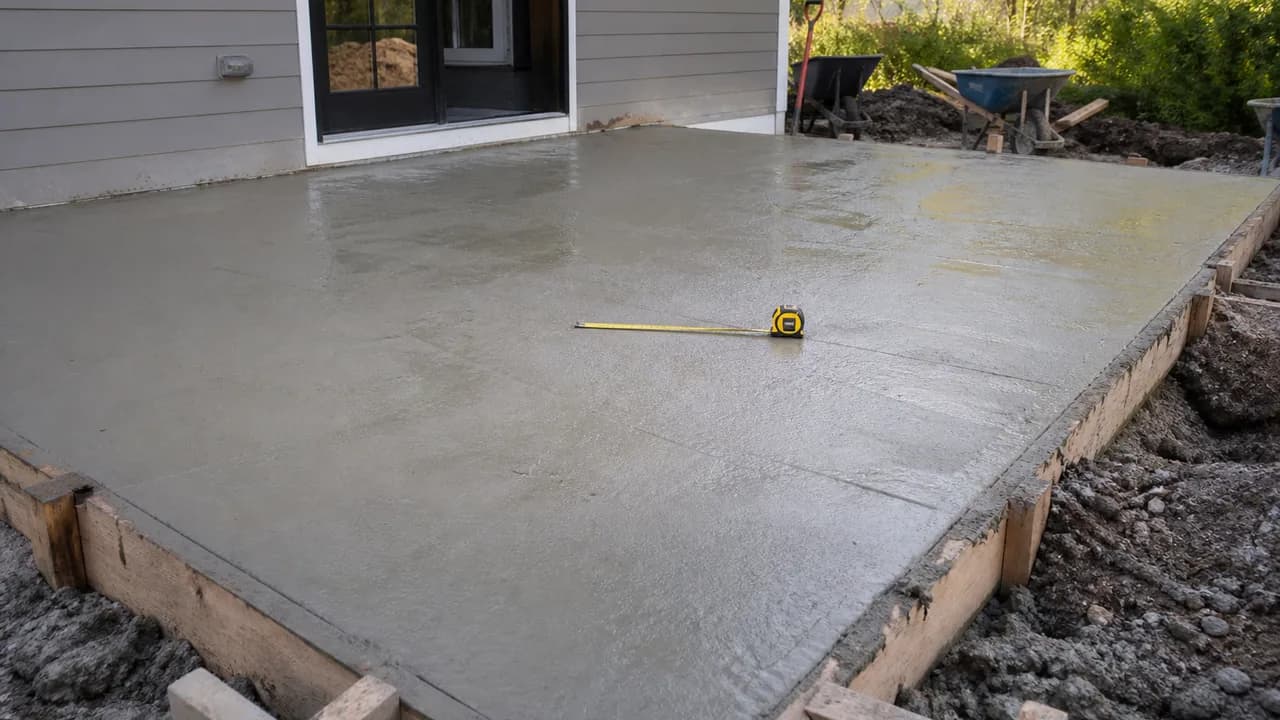
Concrete
Concrete Slab Calculator: A Complete Guide
Step-by-step walkthrough for calculating cubic yards, ordering the right amount, and avoiding short pours.
9 min read
Read articleEstimate ready-mix cubic yards or bagged concrete for slabs, patios, footings, and small pours. Compare delivery vs bags before you order.
Updated Jun 2026 · 2 calculators · 1 guides
Concrete is ordered by volume — cubic yards for ready-mix or bag count for small projects. These calculators convert your slab or pad dimensions into an order quantity with waste for spillage and uneven subgrade.
Choose based on project size and how you plan to purchase material.
Volume equals length × width × thickness converted to feet, then to cubic yards (÷ 27). Bag counts use per-bag yield with waste applied. Recommended orders round up to practical units — 0.1 yd³ for ready-mix or whole bags.
Free tools for concrete projects — click any calculator to get started.
Planning tips and formulas for concrete projects.
Step-by-step walkthrough for calculating cubic yards, ordering the right amount, and avoiding short pours.
Use the Concrete Calculator for ready-mix orders over about one cubic yard. Use the Concrete Bags Calculator for small pads, post holes, and patch work under roughly one cubic yard.
Ready-mix is sold by the cubic yard and delivered by truck. Bagged mix is sold by the bag with a yield printed on the label — enter that cubic feet value in the bags calculator.
Residential patios and walkways are commonly 4 inches thick. Driveways and heavy-load areas often use 5–6 inches. Check local codes for your project.
Add at least 5–10% for spillage, form overfill, and uneven base. Running short during a pour is costly and difficult to fix on site.
No. These tools estimate concrete volume only. Rebar, wire mesh, and compacted base layers are separate materials.
Explore every free SmartMaterialCalc tool across paint, concrete, flooring, outdoor, lumber, and roofing.
View all calculators