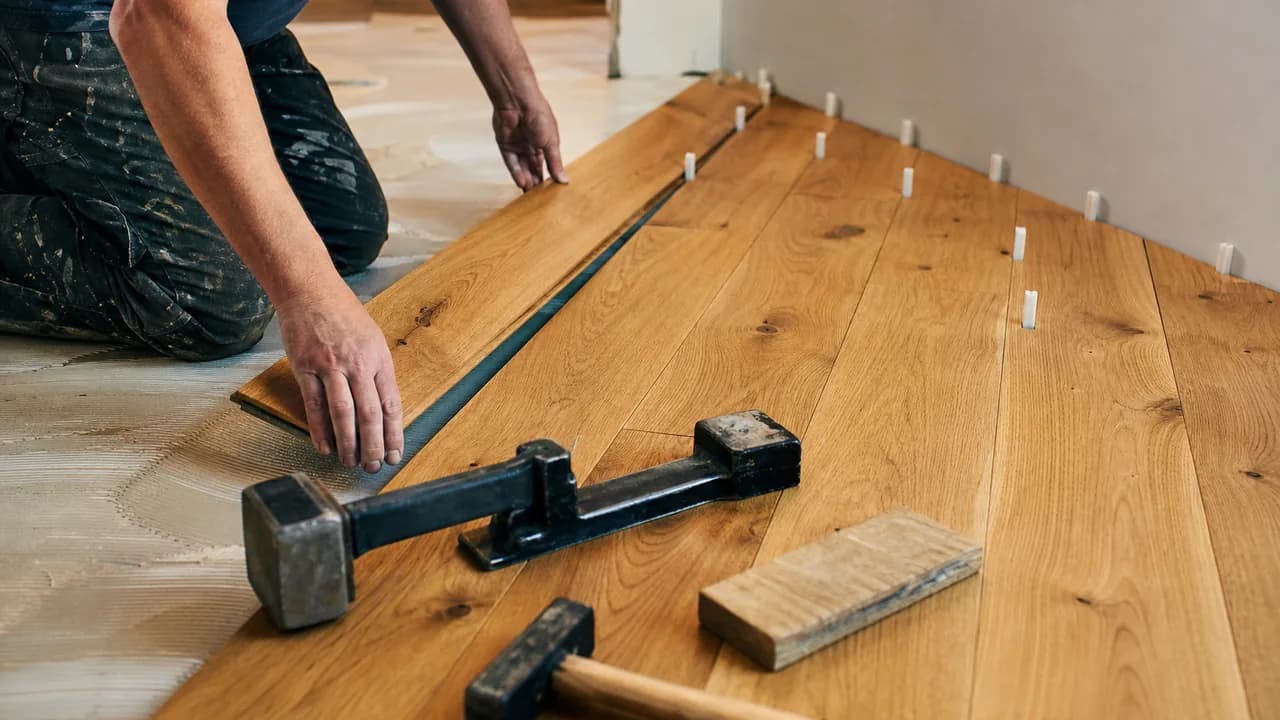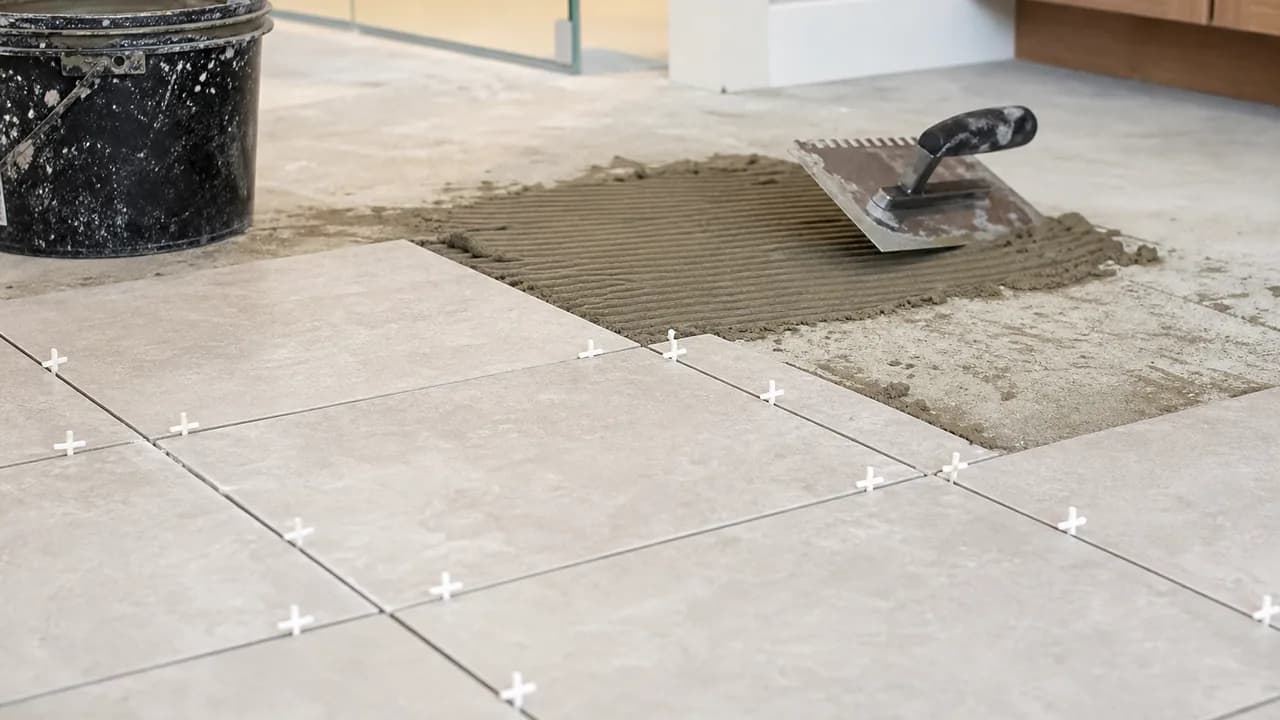
Tile overage percentage — also called waste factor — is the extra tile you order beyond net floor or wall area so cuts, breakage, and pattern waste do not leave you short. In the US, most DIY installs start at 10% overage for a straight lay. Diagonal, brick, herringbone, and large-format layouts need more. This guide shows how much extra tile to buy, how to order by the box, and how to match retailer lot numbers so your floor stays consistent.
Why tile overage (waste factor) matters
Tile is sold by the box with a fixed square-foot coverage on the label. If you order exact net area and run short, matching the same dye lot weeks later is hard — and a shade mismatch shows on large-format porcelain and stone.
Cuts consume full tiles even when only part of the piece lands on the floor. Herringbone and chevron create triangular offcuts you usually cannot reuse. Ordering tile how much extra you need up front costs less than a stalled install.
Breakage during shipping, scoring, and handling is normal. Pros plan for it; homeowners who buy zero overage often come up one or two tiles short on the last row.
How much extra tile to buy (overage chart)
Use this tile overage percentage chart as your starting point, then adjust for room shape and tile size. Measure net area in square feet first, multiply by (1 + overage), then divide by box coverage and round up.
If you are deciding between two percentages, choose the higher one for natural stone, large-format tile over 15 inches, or rooms with many jogs and closets.
| Layout / situation | Overage % | When to use |
|---|---|---|
| Straight lay, rectangular room | 10% | Standard grid, few cuts, tile ≤ 12 in |
| Diagonal, brick / running bond | 15% | Angled wall cuts, offsets, L-shapes |
| Herringbone, chevron, mosaic patterns | 15–20% | High offcut rate at borders |
| Large-format (any side > 15 in) | +5% on top of base | Higher breakage when cutting |
| Natural stone / irregular edges | 15% minimum | Fissures and sorting waste |
Calculate net floor or wall area
Measure length × width in feet for each tiled surface. Split L-shaped rooms into rectangles, then add. Include niches, shower floors, and matching backsplash sections.
For shower walls, measure each wall (width × height), subtract untiled openings, and total all walls. Do not subtract vanities or toilets from floor area — you still cut around them and offcuts rarely reuse at full size.
Convert tile size and order whole boxes
Box labels list coverage in square feet. Convert a single tile from inches with length × width ÷ 144. Example: a 12×24 in tile covers 2 sq ft. Divide net area by per-tile coverage for a raw count, then apply overage to square footage before dividing by box coverage.
Never round down. If the math says 8.3 boxes, buy 9. Purchase every box from the same lot number, and leave one unopened box labeled for future chip repairs.
Ordering tile: how much extra for special cuts
Floor drains, toilet flanges, and curbless entries each consume at least one full tile. Border listellos are a separate linear-foot count with their own 10% overage.
Thin-set and grout follow the same overage idea: buy one extra bag so you do not stop mid-job. Confirm return policies on unopened boxes before you leave the store.
Practical examples
Bathroom floor — 10% overage
Scenario: A 5×8 ft bathroom (40 sq ft) with 12×24 in porcelain in a straight lay. Box covers 15.5 sq ft.
Result: With 10% tile overage: 40 × 1.10 = 44 sq ft. 44 ÷ 15.5 ≈ 2.84 boxes → buy 3 boxes (46.5 sq ft). That covers toilet and vanity cuts.
Backsplash diagonal — 15% overage
Scenario: Backsplash 18 ft long × 18 in tall (27 sq ft) with 3×6 in subway tile on a diagonal.
Result: Raw tiles: 27 ÷ 0.125 = 216. With 15% overage: 216 × 1.15 = 248 tiles. Order enough sheets/boxes to cover 248 tiles and verify lot numbers.
Large-format living area — 15% overage
Scenario: 15×20 ft room (300 sq ft) with 24×24 in tile in a running bond. Boxes cover 16 sq ft.
Result: Large-format adds 5% to a 10% base → 15% total. 300 × 1.15 = 345 sq ft → 345 ÷ 16 ≈ 21.6 → buy 22 boxes from one lot.
Common mistakes
- Ordering exact net square footage with 0% overage, then running short on the last row.
- Using 10% tile overage for herringbone or diagonal layouts that need 15–20%.
- Mixing lot numbers and creating visible shade shifts.
- Forgetting shower walls, niches, or benches in the bathroom tile order.
- Converting tile inches incorrectly (forgetting ÷ 144).
- Returning the last unopened box and leaving no repair stock.
Recommended assumptions
Calculate tile quantity with overage
Enter room size, tile size, and layout to get tile count and box quantity with the right tile overage percentage built in.
Open Tile CalculatorFrequently asked questions
Use 10% for a straight lay on a simple rectangular room, 15% for diagonal or patterned layouts, and 15–20% for herringbone, chevron, or complex mosaics. Add about 5% more for large-format tile over 15 inches on any side.
Measure the full floor (and shower walls if they use the same tile), apply 10% overage for a straight lay or 15% for diagonal, then round up to whole boxes. Do not subtract the vanity or toilet from the floor area.
It means multiplying net square footage by your overage percentage (for example 1.10 or 1.15), dividing by the box coverage on the label, and rounding up. That extra covers cuts, breakage, and a spare box for future repairs.
Yes. Retailers and manufacturers often say “waste factor” or “overage.” Both mean the percentage of extra tile you add above net area before ordering boxes.
No for estimating. You still cut tiles around those fixtures, and offcuts are usually too small to reuse. Full-area math plus overage covers those cuts.
Policies vary. Many big-box stores accept unopened full boxes within about 90 days. Specialty shops may refuse natural stone or special orders. Confirm before buying and still keep one box for repairs.